
By Souradeep Gupta
Director, Systems Thinking Limited | DISTF Independent Evaluator |Lead Independent Reviewer, Technology Design Assurance | Member, DINZ Regulatory & Trust Credential Adoption Working Groups | Contributor, NZ Inc Digital Identity Reference Architecture
Executive Summary
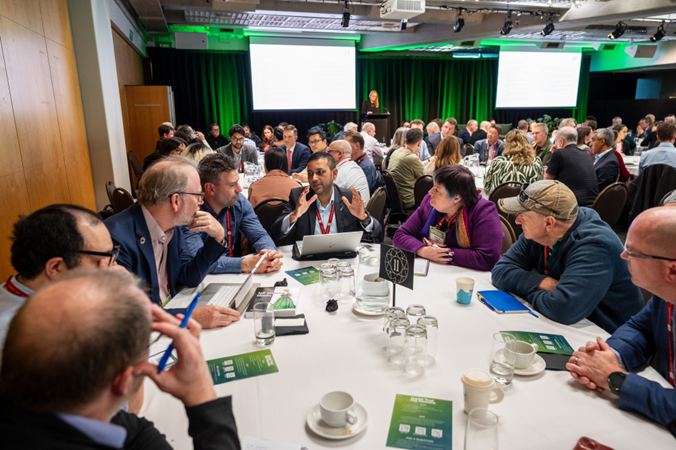
At the recent Digital Trust Hui Taumata 2026, the strategic briefing ‘Open Layer or Closed Platform? Aotearoa’s Strategic Inflection Point’ laid bare the fundamental choice facing New Zealand’s digital economy. As enterprise architects and digital strategists, we stand at a generational crossroads: do we allow our national digital ecosystem to be captured by proprietary, closed ‘walled gardens’ and centralised hyperscale platforms, or do we continue to architect an open, interoperable, and sovereign digital public infrastructure (DPI)[i]?
The surging attendance and engagement at the DINZ Hui Taumata demonstrated that awareness of this architectural imperative is accelerating rapidly across both the public and private sectors. As we enter the era of Agentic AI, digital identity is no longer merely about human logins or static credentials—it is the foundational trust-spanning protocol governing how autonomous software agents, institutions, and citizens interact, delegate authority, and transact.
1. Economic Fundamentals: Evolving the 2021 Regulatory Impact Assessment
To understand our trajectory, we must revisit where our foundational policy journey began. In February 2021, the New Zealand Government released the Regulatory Impact Statement for the Digital Identity Services Trust Framework Bill. The 2021 RIA estimated that establishing a secure, decentralised digital identity trust framework could unlock economic value between 0.5% and 3.0% of New Zealand’s GDP[ii].
While visionary and foundational for its time, the 2021 assessment naturally preceded two significant global technological shifts that we must now incorporate into our ongoing strategic planning:
- The Emergence of the Agentic AI Multi-Agent Economy: The initial RIA evaluated human-to-service transactions. We must now model an environment where millions of autonomous AI agents negotiate contracts, process payments, and verify entitlements at machine speed[iii].
- The Transformative Proof from Global DPI Implementations: Over the last decade, jurisdictions adopting open Digital Public Infrastructure (such as India, Brazil, and Singapore) have proven that open protocol layers create exponential network effects, far outstripping traditional platform-centric ROI models.
As global DPI architect Dr. Pramod Varma illustrated at our briefing sessions, open protocols unbundle monopolies and redistribute power to the edges[iv]. For Aotearoa New Zealand, building upon our open trust architecture is our primary defence against becoming a perpetual ‘price taker’ paying substantial platform rents to foreign monopolies.
2. The Architectural Building Blocks: The NZ Inc Reference Architecture
In enterprise architecture, composability and loose coupling determine longevity. The commendable work on the NZ Inc Digital Identity Reference Architecture embodies this by using modular, layered building blocks to establish verifiable trust between Issuers, Holders, and Relying Parties without centralised chokepoints[v].
Currently, the NZ Inc Reference Architecture successfully maps out the foundational layers of this ecosystem, up to the Self-Sovereign Identity (SSI) and Digital Wallet boundary. The following building block diagram outlines this foundational layer:

Business Value: By anchoring trust at the cryptographic layer rather than in a centralised database, organisations eliminate the ‘honeypot’ risk of massive data breaches. For businesses and government agencies, this translates to drastically lower compliance costs, reduced liability, and frictionless, high-assurance customer onboarding without retaining toxic data.
However, to operate at the exponential scale of an Agentic AI economy, we must continuously evolve and look at how this robust foundation can be extended.
3. Extending the Blocks for Agentic AI: VTAs, VTCs, and VTNs
As highlighted by Drummond Reed during his deep-dive masterclasses with the DINZ Trust Credential Adoption (TCA) Working Groups, our architecture must extend beyond basic SSI to support autonomous agents and large-scale ecosystems. This is where the Sovereign Stack introduces Verifiable Trust Agents (VTAs), Verifiable Trust Communities (VTCs), and Verifiable Trust Networks (VTNs)[vi].

Business Value: VTAs transform static digital identity into an active, programmable economic engine. By enabling AI agents to act as verified fiduciaries on behalf of their owners (via Verifiable Relationship Credentials), businesses can automate complex supply chain negotiations, instant regulatory reporting, and micro-payments without human bottlenecks, saving billions in operational overhead while maintaining cryptographic liability.
4. Scaling Across Ecosystems: The Building Block View
Decentralised trust scales recursively. Rather than building a single monolithic platform, the architecture supports independent Verifiable Trust Communities (VTCs) that can federate under common governance to form massive Verifiable Trust Networks (VTNs)[vii].
The building block structure encompasses the shared VC foundation and scales horizontally across our national and international sectors:

Business Value: Horizontal scaling prevents vendor lock-in and eliminates redundant ‘platform taxes.’ A credential issued in the Health VTC can seamlessly establish trust in the Finance VTC, enabling cross-sector innovation. This interoperable fabric allows value and data to flow frictionlessly across the entire economy, retaining sovereignty domestically rather than surrendering it to global platform oligopolies.
5. Architectural Case Study: Decentralised Patient Health Management
To demonstrate how some these building blocks translate into real-world architectures, I had previously published a Conceptual Architecture for a Decentralised Patient Health Management System[viii]. This architecture can be extended to include VTA/VTC/VTN concepts to provide scalability and future proofing in scenarios posed by societal and technological needs.

In healthcare, patient privacy, data sovereignty, and interoperability across public hospitals, primary health organisations (PHOs), and allied carers are paramount. By adopting a Health Sector VTC built on the open VC standard, patients can hold their medical credentials (immunisations, diagnostics) securely in their sovereign wallets. Autonomous AI Health Assistants (acting as VTAs) can then coordinate appointments governed strictly by dynamic consent credentials, without relying on centralised honeypots of patient records.
6. The Core Philosophy: DPI is About Protocols, Not Large Procurement
A critical learning from both Dr. Pramod Varma’s insights and global DPI implementations is that Digital Public Infrastructure is not about the procurement of large, monolithic IT solutions or building massive national platforms[ix] . Instead, DPI is about adopting open, interoperable protocols with governance built seamlessly into each layer.
By shifting from ‘closed centralised platforms’ to ‘open decentralised networks’, we prevent vendor lock-in, expand access, and induce robust domestic competition. The Digital Identity Services Trust Framework (DISTF) serves as our core legislative anchor—providing the critical governance and trust rules that allow these open protocol building blocks to operate safely and legally in Aotearoa[x]. This ongoing NZ Inc. effort is precisely what enables our ecosystem to thrive.
Conclusion: Aotearoa’s Digital Identity Māhutonga Southern Cross
Our analysis returns to the foundational question posed in our briefing : Will Aotearoa New Zealand continue to build an open, sovereign trust layer that fosters national innovation and self-determination, or will we surrender our economic agency to closed, proprietary tech platforms?
At this point, we must be unequivocal about the guiding star—our Māhutonga, our Southern Cross—for Digital Identity services in Aotearoa New Zealand. The architectural foundation is no longer theoretical; it is real, it is maturing, and it is being actively strengthened by DINZ, the NZ public sector, and the wider digital trust community. With the DISTF legislative anchor, the NZ Inc Reference Architecture, and the scaling models of VTAs, VTCs, and VTNs championed by the Trust Over IP Foundation and Networks for Humanity, we now hold a blueprint capable of delivering digital public infrastructure that protects privacy, empowers our people, honours Māori data sovereignty, and fuels an equitable AI economy. The question is no longer whether we can build this future—it is whether we will choose to lead it. To realise this vision, we must commit—collectively and decisively—to operationalising these trust frameworks, aligning public and private sector investment, and embedding Māori governance at every layer of the ecosystem. Digital trust will not emerge by accident; it must be architected, stewarded, and upheld. Aotearoa can set a global benchmark. Now is the moment to move from blueprint to build, from aspiration to action, and from fragmented initiatives to a unified, sovereign digital trust infrastructure that serves every New Zealander.
References:
i Digital Identity NZ. (2026). Open layer or closed platform? Aotearoa’s strategic inflection point. https://digitalidentity.nz/2026/08/28/open-layer-or-closed-platform/
ii Department of Internal Affairs. (2021). Regulatory impact statement: Digital identity services trust framework bill. New Zealand Government. https://www.regulation.govt.nz/assets/RIS-Documents/ris-dia-dpditf-feb21.pdf
iii Networks for Humanity. (n.d.). Networks for humanity global initiative. https://networksforhumanity.org/
iv Digital Identity New Zealand. (2026, August 28). Ngā mihi to Dr Pramod Varma. https://digitalidentity.nz/2026/08/28/nga-mihi-to-dr-pramod-varma/
v New Zealand Government. (n.d.). NZ inc digital identity reference architecture. GitHub. https://github.com/nz-trust-framework/DISTF-reference-architecture
vi Digital Trust Hui Taumata. (2026, August 13). Sovereign AI, Indigenous rights and the architecture of trust. https://digitaltrusthui.co.nz/sovereign-ai-indigenous-rights-and-the-architecture-of-trust/
vii First Person Cooperative. (n.d.). First person network. https://firstperson.network/
viii Gupta, S. (2026). Conceptual architecture for a decentralised patient health management system. Systems Thinking Limited. https://systhink.nz/conceptual-architecture-decentralised-patient-health-management-system/
ix Foundation for Interoperability in Digital Economy (FIDE). (n.d.). Beckn protocol universal interoperability fabric. https://becknprotocol.io/
x New Zealand Government. (n.d.). Digital identity services trust framework (DISTF). Digital.govt.nz. https://www.digital.govt.nz/standards-and-guidance/identity-and-trust/trust-framework/